Standard FERS example
$90,000 x 22 x 1.0% = $19,800
A 58-year-old with 22 years of service and a $90,000 High-3 receives $19,800 per year, about $1,650 monthly.
Federal retirement planning
Know your federal pension before you decide.
Estimate your FERS annuity, compare retirement dates, and understand the rule behind every number. Free, private, and no sign-up required.
Quick answer
The FERS basic annuity is High-3 × Years of Creditable Service × Multiplier . This calculator also includes unused sick leave, military buyback, special category rules, survivor benefits, FERS Supplement, and a comparison of retiring at MRA+10, 60, or 62.

Your FERS benefit
Free toolFERS basic annuity
A predictable pension based on your High-3 salary and creditable service.
FERS Supplement
A bridge payment for some retirees who start benefits before age 62.
Social Security + TSP
The other two legs of FERS. Plan them together, not in isolation.
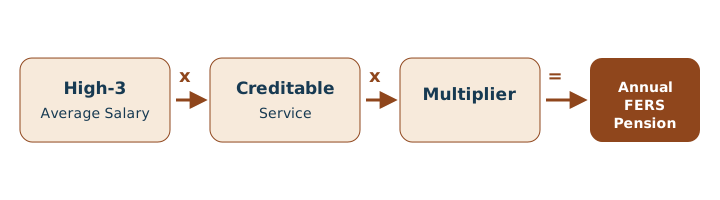
The basic annuity formula: High-3 × Creditable Service × Multiplier.
FERS Retirement Calculator
Prepared: 2026-08-14. Independent educational estimate, not an official OPM benefit determination.
Federal pension estimator
Enter three numbers for a quick estimate, then open advanced options to include sick leave, military buyback, special provisions, and survivor benefits.
Example shown: $100,000 High-3, 25 years of service, age 62. Based on the OPM FERS formula .
Your inputs stay in this browser. This estimate is for education only and is not an official OPM benefit determination.
Compare retirement ages
Service is projected forward or backward from the age you entered. These are planning scenarios, not official determinations.
How it works
The basic FERS formula is simple. The detail is in what counts as salary, service, and the right multiplier.
01
The highest average basic pay from any 36 consecutive months of federal service.
02
FERS-covered years, unused sick leave, and military time after buyback.
03
1%, 1.1%, or special category rates depending on age, service, and position.
Reduction = 5% x full years under age 62 + (5% / 12) x additional months
5% for each full year under age 62, prorated monthly.
FERS formula
The basic FERS annuity is High-3 average salary x creditable service x the correct multiplier.
Annual Pension = High-3 x Service x Multiplier
Example: a $100,000 High-3 with 25 years of service at 1.1% gives $27,500 per year.
| Situation | Multiplier | When it applies |
|---|---|---|
| Standard FERS | 1.0% | Most employees who retire before age 62, or at 62+ with less than 20 years. |
| Enhanced | 1.1% | Age 62 or later with at least 20 years of service. |
| Special category | 1.7% / 1.0% | First 20 years at 1.7%, then 1% for LEO, ATC, firefighters, and nuclear materials couriers. |
“1 percent of his average pay … is the annuity for each year of creditable service” — and, for an employee with at least 20 years of creditable service whose annuity commences at age 62 or later, “1.1 percent of his average pay is the annuity for each year of such service”.
MRA+10
You can retire at MRA with 10 years of service, but beginning benefits before 62 can reduce your annuity by 5% per year, under 5 CFR Part 843.
No reduction when:
| Birth year | Minimum Retirement Age |
|---|---|
| 1970 or later | 57 |
| 1969 | 56 years 10 months |
| 1965 to 1968 | 56 years 2 to 8 months |
| 1953 to 1964 | 56 |
| 1948 to 1952 | 55 years 2 to 10 months |
| Before 1948 | 55 |
FERS Supplement
Eligible employees who retire before 62 may receive the FERS Special Retirement Supplement. It is not Social Security and ends at age 62.
Immediate retirement eligibility: 30 years of service, 20 years at age 60, or certain special category retirements.
Social Security at 62 x FERS Years / 40
Applies only when the scenario appears eligible; an earnings test before 62 can reduce or end the actual payment.
Worked examples
Each example shows how service, age, special provisions, survivor benefits, and other income change the same basic formula.
| Retirement path | Typical eligibility | Key rule |
|---|---|---|
| Immediate full retirement | 62+ with 5+ years; 60 with 20+; MRA with 30+ | No MRA+10 reduction. 1.1% multiplier applies at 62+ with 20+ years. |
| MRA+10 | MRA with 10 to 29 years of service | Immediate, but usually reduced before age 62 unless an exception applies. |
| Age 60 with 20+ years | Age 60 with at least 20 years | Immediate and no age reduction. |
| Special category | LEO, ATC, firefighter, or nuclear materials courier | 1.7% for the first 20 years, then 1.0%. |
| Deferred retirement | Left federal service before immediate eligibility | Collect later. FEHB generally does not continue. |
| Postponed retirement | Eligible for immediate retirement but delays benefit start | May reduce the MRA+10 age penalty and may allow FEHB to resume later. |
$90,000 x 22 x 1.0% = $19,800
A 58-year-old with 22 years of service and a $90,000 High-3 receives $19,800 per year, about $1,650 monthly.
$110,000 x 24 x 1.1% = $29,040
At 62 or later with 20+ years of service, the 1.1% multiplier raises the pension permanently — a key part of the 60 vs 62 decision.
$95,000 x 20 x 1.7% = $32,300
Eligible LEOs, firefighters, ATCs, and nuclear couriers earn 1.7% for the first 20 covered years, then 1.0%.
$25,000 x (1 - 25%) = $18,750
A 57-year-old beginning benefits at MRA loses 5% per year under 62 — five years means a 25% reduction.
$30,000 x 90% = $27,000
A full survivor benefit cuts your annuity by 10% but continues 50% to your spouse; partial cuts 5% for 25%.
$2,000 x 30 / 40 = $1,500
With an estimated $2,000 Social Security benefit at 62 and 30 years of FERS service, the approximate monthly Supplement is $1,500.
22 FERS years + 4 military years = 26 years
Military time counts only after the deposit is paid — otherwise the estimate overstates creditable service.
1,043.5 hours / 2,087 = 0.5 years
Sick leave adds fractional service years to the calculation but never creates eligibility.
$2,500 FERS + $1,800 Social Security + $900 TSP = $5,200 gross per month
Taxes, FEHB, FEGLI, and other deductions reduce the amount available for spending.
COLA
FERS cost-of-living adjustments differ from Social Security COLA rules and should not be treated as guaranteed future income.
Eligibility and timing depend on retirement type; special category retirees may receive COLA earlier.
Small COLA differences compound over 20 to 30 years — use conservative assumptions when projecting income.
Retirement types
Both delay an annuity after leaving federal service, but they affect benefits differently — the difference can be worth thousands of dollars.
| Item | Deferred | Postponed |
|---|---|---|
| Who can use it | Employees who leave before qualifying for an immediate annuity. | Employees who already qualify for an immediate annuity but choose to delay it. |
| Health insurance | FEHB generally does not continue. | FEHB may resume when the postponed annuity begins. |
| Typical use | Leaving government and waiting until a later age to collect. | Retiring at MRA+10 or 60+20 and delaying to reduce the age penalty. |
CSRS and CSRS-Offset
This page is built around FERS; CSRS and CSRS-Offset use different formulas — verify your numbers with OPM or HR.
Generally covers employees first hired before 1984 who did not elect FERS. It uses a different multiplier and treats Social Security differently.
Combines CSRS-style benefits with Social Security coverage and is easy to confuse with FERS — take the calculator's system warning seriously.
Retirement type checker
Choose the closest situation. This is educational guidance, not an official determination.
Special provisions
Special category employees generally get a higher multiplier and may face mandatory retirement earlier.
| Category | Multiplier | Planning note |
|---|---|---|
| Law Enforcement Officer | 1.7% / 1.0% | First 20 years at 1.7%, then 1%. Verify covered LEO service with HR. |
| Air Traffic Controller | 1.7% / 1.0% | ATC employees may also have different age and service requirements. |
| Firefighter | 1.7% / 1.0% | Special provision eligibility depends on covered firefighter service. |
| Nuclear Materials Courier | 1.7% / 1.0% | Special retirement rules apply. Verify with OPM before relying on an estimate. |
Military buyback
Military service generally does not count toward FERS until you complete a military service deposit.
Only military time for which a deposit has been paid or confirmed. Unpaid time should not be entered.
Buyback years increase creditable service, lift the annuity, and may affect eligibility and the Supplement.
Checklist
A calculator gives you a planning number. These checks turn it into a safer retirement decision.
01
FERS, CSRS, CSRS-Offset, or special category changes the formula.
02
Ask HR for your SCD and confirm buyback and prior service.
03
Use your earnings record to confirm the highest 36 months of basic pay.
04
Compare Full, Partial, and None with your spouse.
05
Confirm eligibility, premiums, and your retirement type's effect on insurance.
06
Request a formal annuity estimate from HR or OPM near retirement.
High-3 explained
High-3 is the highest average basic pay you earn during any 36 consecutive months of federal service. It is not necessarily your final salary, and it is not your total compensation.
OPM looks at every possible consecutive 36-month period in your career and uses the highest average, so an earlier period can beat your final years if you moved to a lower-paying position. A promotion inside the highest window raises your pension for life.
Sick leave credit
Unused sick leave is converted to creditable service for annuity computation, but it cannot be used to meet minimum service requirements.
| Sick leave balance | Approximate service credit |
|---|---|
| 520 hours | About 3 months |
| 1,040 hours | About 6 months |
| 1,560 hours | About 9 months |
| 2,087 hours | About 1 year |
Survivor benefit
Electing a survivor benefit reduces your annuity but provides continuing income to your spouse.
| Choice | Your reduction | Spouse benefit |
|---|---|---|
| No survivor benefit | 0% | No spouse annuity |
| Partial survivor benefit | 5% | 25% of the unreduced annuity |
| Full survivor benefit | 10% | 50% of the unreduced annuity |
Application timeline
A general planning sequence — your agency and OPM set the official deadlines.
12 to 18 months
Review service, High-3, leave, TSP, and goals.
6 to 12 months
Ask HR to review SCD, system, deposits, and leave.
90 days
Complete forms; review beneficiary, FEHB, FEGLI choices.
Retirement month
Confirm salary, leave, and estimate before processing.
Glossary
These definitions map directly to the calculator and the sections above.
Highest average basic pay from any 36 consecutive months.
Service used in the annuity formula, including eligible military time.
Minimum Retirement Age, based on year of birth.
Bridge payment for some eligible retirees before age 62.
The federal defined contribution savings plan.
Service Computation Date, used for service credit and eligibility.
Sources
Every formula is cited to official sources: per OPM's FERS Computation guidance, the basic annuity is computed from your High-3 average salary and creditable service. Governing rules: 5 U.S.C. § 8417 and 5 CFR Part 843 . Verify the latest rules with OPM and your HR office.
Editorial standards
We check the formulas against OPM's FERS Computation guidance. Last reviewed: 2026-08-14.
This tool is built and reviewed by the FERS Retirement Calculator editorial team. It is not affiliated with OPM.
This calculator runs entirely in your browser. It does not collect, store, or send the numbers you enter.
FAQ
The answers behind the calculator and the federal retirement rules that shape your estimate.
High-3 average salary x years of creditable service x multiplier: 1% per year, rising to 1.1% at 62 or later with 20+ years. Special category employees earn 1.7% for their first 20 years.
High-3 is the highest average basic pay from any 36 consecutive months of service, usually your final three years. It includes basic pay and locality pay, and excludes overtime, bonuses, and most premium pay.
Yes. Unused sick leave converts to creditable service at 2,087 hours per year and can increase the annuity amount, but it cannot by itself make you eligible to retire.
MRA+10 lets you retire at your Minimum Retirement Age with at least 10 years of service. Benefits that begin before 62 are reduced 5% per year, unless you have 30 years of service or begin at age 60 with 20 or more years.
An extra payment for eligible retirees who start benefits before age 62, approximated as your estimated Social Security benefit at 62 multiplied by FERS service divided by 40. It ends at age 62.
A full survivor benefit reduces your annuity 10% and pays your spouse 50% of the unreduced amount. Partial: 5% for 25%. No election: unreduced annuity, no spouse benefit.
Yes, but only military time for which a deposit has been paid counts as creditable service. Do not enter unpaid military time.
Deferred: you left federal service before immediate eligibility and collect later. Postponed: you are already eligible but delay the start, often to avoid the MRA+10 penalty or restore FEHB.
Yes. The Supplement is subject to an earnings test before age 62 — income above the annual limit can reduce or eliminate it. This calculator does not apply the earnings test.
Not reliably. It uses FERS formulas; CSRS and CSRS-Offset use different multipliers. The system selector shows a warning — verify any estimate with OPM or HR.
Yes. Age 60 with at least 20 years of creditable service is an immediate, unreduced FERS retirement. Retiring at 62 or later with 20 or more years also raises the multiplier from 1.0% to 1.1%.
No. This is an educational estimate. Your official annuity is determined by OPM and your agency from your official personnel and pay records.
Disclaimer
This is an independent educational estimate, not an official OPM benefit determination. FERS rules and amounts can vary based on your official service record, agency, special provisions, and current law. Before making a retirement decision, verify your numbers with your HR office and OPM.
Social Security and TSP
FERS is only part of your retirement income.
Most federal retirees combine FERS, Social Security, and TSP — the full retirement picture depends on all three.
FERS annuity
A predictable pension based on High-3, creditable service, and the correct multiplier.
Social Security
Generally begins at 62 or later; the FERS Supplement may bridge part of the gap for eligible early retirees. Rules per the Social Security Administration.
TSP
The flexible piece — withdrawals can be adjusted to market conditions and spending needs. See tsp.gov.
Other income
Part-time work, rentals, or taxable investments can also shape retirement cash flow.